
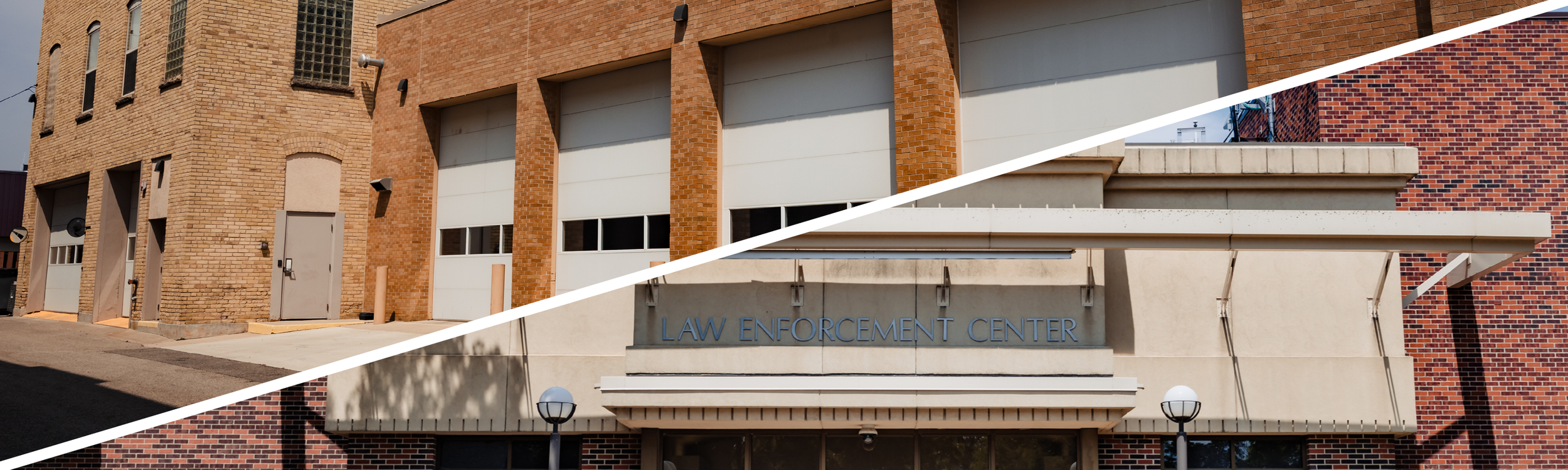
The Challenges Facing Owatonna's Police and Fire Stations
After decades of heavy use, Owatonna's police and fire stations face serious health, safety and infrastructure problems that make it harder for first responders to deliver the emergency services residents rely on.
The Fire Station was built in 1906 and hasn't been significantly updated in nearly 30 years. The Police Department operates out of a nearly 60-year-old building that was originally a commercial bank.
These facilities were never designed for how police and fire services work today.

Police Station Challenges
Banking and police operations have little in common. A commercial bank built in 1968 simply does not work for the daily demands of modern policing. Even with major renovations, the facility would still fall short because of its inefficient layout, limited space and aging condition.
-
The building lacks secure holding areas and a secure garage (called a sallyport) to safely bring people in custody into the station and separate them from officers, staff and the public. As a result, detainees are sometimes held in temporary spaces not designed for secure detention.
-
There is not enough private space for sensitive conversations with victims, witnesses and families. Visitors must walk through staff areas to reach interview rooms, reducing privacy and confidentiality during some of the most difficult moments they may face.
-
Evidence storage is far from the building entrance on the second floor, forcing officers to spend extra time moving and handling materials instead of doing essential police work. Large evidence items are also often stored securely offsite as there is no space in the current station.
-
There is no dedicated training and limited open space for hands-on defensive tactics training. Officers currently train in a former bank vault, limiting their ability to prepare for real-life situations.
-
The station has ongoing water leaks, aging heating, cooling and plumbing systems, failing windows and a roof near the end of its useful life. These problems increase annual maintenance costs and disrupt daily police work.
-
The facility lacks quiet areas for officers to rest and decompress after stressful or traumatic situations. Locker rooms, fitness areas and restrooms are too small for current staffing levels and are squeezed into the basement. Additionally, they don’t allow for proper decontamination after an officer is exposed to a harmful substance on their shift.
These videos highlight infrastructure challenges facing the Police Department today, like ongoing water leaks and sewer issues that need frequent, costly repairs.

Fire Station Challenges
Owatonna's Fire Station was built in 1906 and designed for a different era. While it’s a valued community landmark, the building no longer meets today's fire and emergency response needs.
-
The station lacks space for today's larger fire trucks and equipment. Trucks have limited room to move inside and some gear must be stored in truck bays, exposing it to vehicle exhaust and harmful fumes. These constraints make it harder for firefighters to respond quickly during emergencies.
-
The current building lacks dedicated spaces to clean gear and remove harmful smoke residue, chemicals and other contaminants after a fire. Gear is stored near fire trucks, where it can be exposed to vehicle exhaust and other pollutants. The building also lacks proper decontamination areas and ventilation systems to separate contaminated equipment and personnel from living and administrative spaces. As a result, contaminants can be carried throughout the facility, making it difficult to maintain truly clean areas after a fire response and increasing long-term health risks for firefighters.
-
The current training areas are too small, not suited for larger groups and need technology upgrades. Because space is limited, some training takes place in the basement using makeshift props — making it harder to conduct the hands-on training firefighters rely on to prepare for emergencies.
-
The building doesn't provide enough space for firefighters to rest, recover or stay during long shifts. Sleeping areas are small, shared and there is limited space for privacy and recovery after long or difficult calls.
-
The 120-year-old building requires increasing repairs simply to stay operational. Aging electrical and heating systems, frequent water leaks and building materials at the end of their useful lives lead to frequent repairs, higher costs and disruptions to daily operations.